



























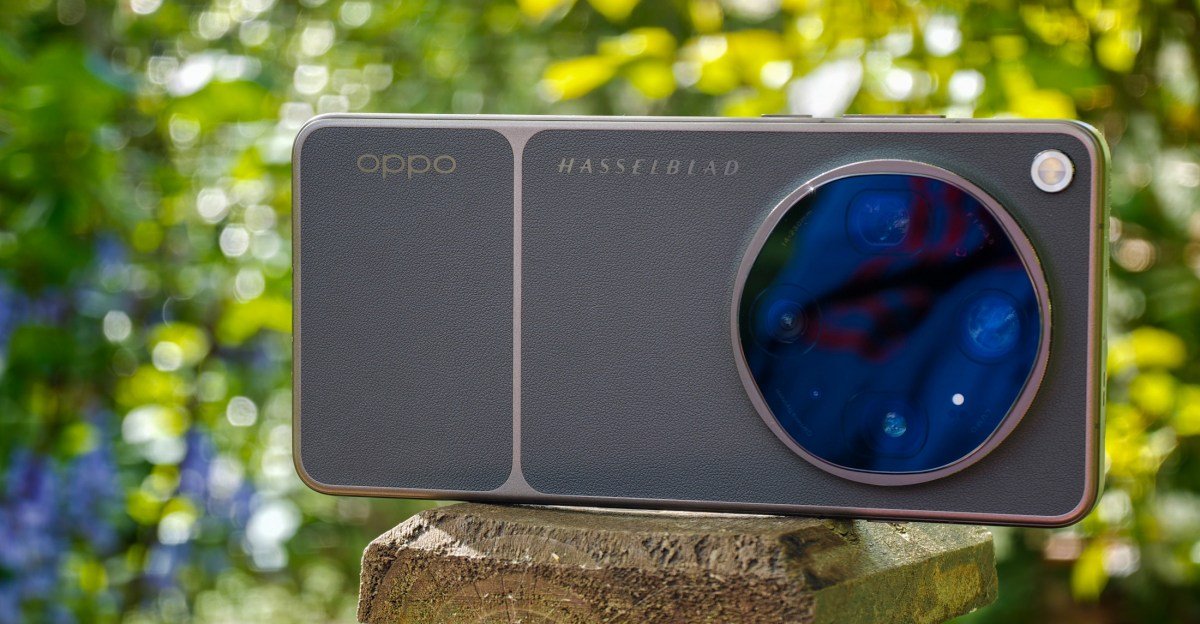
Oppo’s Find X9 Ultra offers something that no other new phone has for three long years: a 10x telephoto lens. In an attempt to win the photography front of the war between the various Ultra flagships, Oppo has turned to a trick last employed by Samsung’s Galaxy S23 Ultra. It’s a better 10x lens than ever before, but is it good enough for the moments you might really need it?
The long-distance lens is the best of its kind, but compared to this phone’s other lenses it struggles a little with the usual suspects: moving subjects, low light, and moving subjects in low light. Fortunately the Find X9 Ultra is an excellent phone otherwise. It pairs top specs, including a big battery and excellent display, with what I think is a truly handsome design (it’s my favorite of the year so far). And while the 10x lens might be verging on a gimmick, the rest of the camera system is among the best on the market.


$1960
The Good
- Handsome design
- Flagship specs across the board
- Capable camera system
The Bad
- 10x camera feels limited
- No Qi2 magnets
- Expensive
Unlike Oppo’s previous Ultras, and its Find N foldables, the X9 Ultra is launching in Europe and the UK, where it costs £1,449 (around $1,960) and ships from May 8th. That includes 12GB of RAM and 512GB of storage.
That gets you an excellent phone. Gorilla Glass Victus 2 protects the 144Hz OLED display and a joint IP66, IP68, and IP69 rating keeps out everything from dust to high-temperature water jets. Qualcomm’s Snapdragon 8 Elite Gen 5 powers the performance, and a hefty 7,050mAh silicon-carbon battery keeps things running well past a full day. The top 100W charging speed relies on Oppo’s proprietary SuperVooc chargers, but it still tops up at a relatively speedy 55W over USB-PD. It’ll receive five major Android OS updates, and six years of security patches.
Of course, you could look at any 2026 Ultra flagship from Oppo’s rivals and see a similar spec sheet. They’re now competing on design and cameras instead.


Oppo has outdone its competition on design. My “tundra umber” version is explicitly styled after retro cameras, and does a better job of it than Xiaomi’s 17 Ultra Leitzphone. The two-paneled rear, finished in vegan leather, evokes classic camera aesthetics. And the horizontal Oppo and Hasselblad logos reinforce the idea that this is designed to be used first and foremost in landscape. The flat edges have curved corners to keep the phone comfortable, and orange accents on the camera ring and shutter button serve as a subtle nod to Hasselblad’s classic color (though the phone’s alternative “canyon orange” finish owes more to Apple). The hexagonal effect on the edges of the camera glass is the only design choice I’m not a fan of, clashing with the simplicity in effect elsewhere.
The company hasn’t held back on the cameras, either, where competition is fiercest. Alongside a 50-megapixel selfie camera, Oppo has included four rear cameras: 200-megapixel main and 3x telephoto lenses, and 50-megapixel ultrawide and 10x telephoto options. Video is impressive, with 4K and 60fps Dolby Vision HDR recording across all five lenses, front and back. That’s in addition to a 300mm telephoto extender lens and a Hasselblad-branded camera grip case, sold separately — Oppo sent me both, but they arrived too late to test for this review.

The Hasselblad Master mode adds pro controls and lets you shoot in RAW across every lens, with up to 16-bit color depth. It includes nine film simulations along with a default Hasselblad tuning that tones down vibrancy and HDR when compared to the regular camera. I was a bit frustrated with how oversaturated and smartphone-y shots looked out of the default camera until I realized this is where I should have been shooting all along, although the more aggressive HDR of the main camera mode does win out from time to time.
The main and 3x telephoto lenses offer more than mere megapixels. Both use larger sensors and faster apertures than most rivals: 1/1.12-inch type and f/1.5 for the main camera; 1/1.28-inch and f/2.2 for the 70mm equivalent tele. Photos are excellent out of both cameras, rich in detail and dynamic range, crisp in daylight and properly exposed at night.
1/24
But the 10x lens is what makes this phone unique. This 230mm equivalent is the first of its kind since Samsung gave up on the format, but thanks to a larger 1/2.75-inch sensor, faster f/3.5 aperture, and new “quintuple prism” periscope design, Oppo claims this offers three times the light capture of the Galaxy S23 Ultra’s equivalent. Details are crisp, colors punchy, and it’s possible to get good photos even in slightly dimmer light. I’m impressed Oppo managed these results with a lens so small.
Still, it’s the only lens out of the five to show meaningful limitations. Moving subjects tend to come out soft and blurry. Color tuning can be inconsistent between photos, and is noticeably out of step with the other cameras on the phone. Direct light sources are frequently blown out. Point this camera at a static subject in good lighting and it’s great, but the rest of the time it’s merely alright.

I’m just not sure what this lens brings to the table. I’m a full convert to lenses like the 70mm, which I now use more than the main camera, but I haven’t found myself reaching for the 230mm lens at all. I don’t often want to take close-up photos of things that are really far away, and the few times I do — soccer matches, concerts, demolition derbies — involve the sort of fast-moving subjects and tricky lighting that this camera struggles with. Half of the 10x photos I’ve taken haven’t even used the dedicated lens anyway, because the phone will often automatically switch to the 3x lens depending on the light level and focal distance. Altogether, it just makes me wonder why it’s even here.
I’m a fan of Vivo’s and Oppo’s add-on telephoto extender lenses, which are even more niche than this, and The Verge’s Allison Johnson just enjoyed testing Vivo’s new 200mm and 400mm extenders for its X300 Ultra. Those lenses may be bigger and less convenient, but they’re also much better. I compared the Find X9 Ultra to the Find X9 Pro with its 230mm extender attached, and the latter took better shots every time. It’s good enough that I’d trust it to photograph a moving singer in a dimly lit concert, or zoom in on a sprinting soccer player from afar. The Find X9 Ultra’s 230mm lens doesn’t quite meet that bar. And if I can’t trust it, I won’t use it.
I don’t know what Oppo sacrificed to include the 10x lens here, but you can be sure that without it the phone would have offered bigger sensors on the other cameras, a larger battery, or simply a lower price tag. I think the Find X9 Ultra is a great phone, but I suspect the version of it without this lens would have been even better.
Agree to Continue: Oppo Find X9 Ultra
Every smart device now requires you to agree to a series of terms and conditions before you can use it — contracts that no one actually reads. It’s impossible for us to read and analyze every single one of these agreements. But we started counting exactly how many times you have to hit “agree” to use devices when we review them since these are agreements most people don’t read and definitely can’t negotiate.
To use the Find X9 Ultra, you must agree to:
- Google Terms of Service
- Google Play Terms of Service
- Google Privacy Policy (included in ToS)
- Install apps and updates: “You agree this device may also automatically download and install updates and apps from Google, your operator, and your device’s manufacturer, possibly using cellular data.”
- Oppo User Agreement
- Oppo User Privacy Protection
- Oppo Data security
There’s also a variety of optional agreements, including:
- Provide anonymous location data for Google’s services
- “Allow apps and services to scan for Wi-Fi networks and nearby devices at any time, even when Wi-Fi or Bluetooth is off.”
- Send usage and diagnostic data to Google
- Google Gemini Apps Privacy Notice if you opt in to using Gemini Assistant
- Oppo Global Search services
- Oppo Smart Decision-Making Service
- Oppo Enhanced Intelligent Services
- Oppo User Experience Programme
Other features, like Google Wallet, may require additional agreements.
Final tally: seven mandatory agreements and more than eight optional agreements.
Photography by Dominic Preston / The Verge