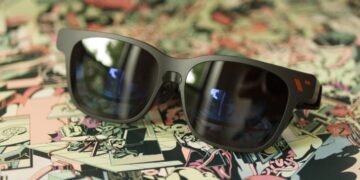
















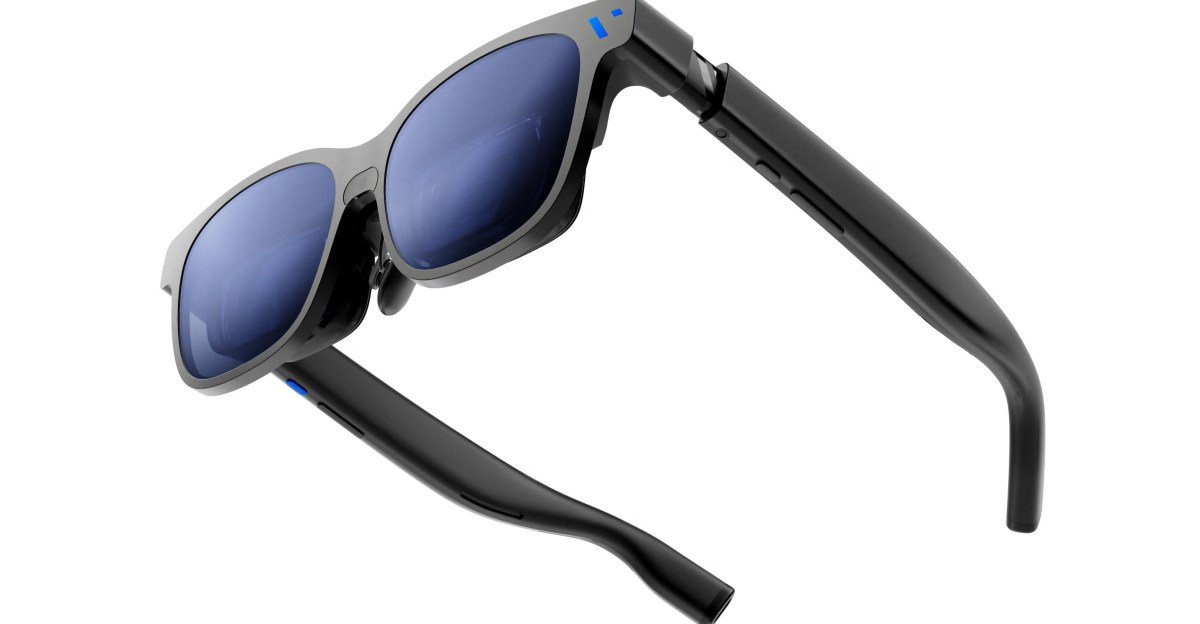
Smart glasses company Viture had a busy 2025, releasing its solid Luma series of glasses and ensuring that its pro mobile dock is compatible with Nintendo’s Switch 2. Now it’s kicking off 2026 by debuting a new model at CES, called The Beast, and it’s available to preorder now for $549 with shipping starting in February.
The price is high for a company known for undercutting Xreal’s glasses with most (but not all) of the same features. In some ways, the price hike is warranted; Viture has caught up with Xreal as it has three degrees of freedom support built-in, letting you anchor your screen in virtual space, or allowing the screen to smoothly follow your head movements. Previous models have required additional hardware or software.
The Beast’s 58-degree field of view is also impressive since it’s a six-degree improvement over Viture’s previous flagship model (Xreal 1S supports 52 degrees). If you want more than just three dimming options, which is what most smart glasses have offered, the electrochromic tint that The Beast uses offers nine levels of adjustment. This lets you see as much or as little of your surrounding environment as you desire. It also has an embedded camera that will unlock six degrees of freedom in some use cases in the future.
Depending on the person, those benefits might make The Beast’s $100 premium price worth it compared to the cheaper 1S. They are certainly nice additions, even if they’re not must-have features for the average user.
One unfortunate omission in The Beast is myopia adjustments. Previous Viture models have dials above each eye’s display to let you make minor tweaks to get a clearer image. Instead, The Beast comes in two sizes (regular and large), but you may need prescription lenses if you’re nearsighted. I, for one, am nearsighted, but I was still able to achieve clear results with some adjustments to the included nose pads.
If you’re deciding between The Beast and the 1S (or any other AR glasses), here are some specs and thoughts worth knowing: Both support up to 1200p resolution (though Viture says it’s coming after launch) and 120Hz refresh rate. They both have 2D-to-3D conversion features that aim to make content more immersive, though my first impression wasn’t positive with either set. The Beast weigh about 96 grams according to my kitchen scale, while the 1S weighs in at 86 grams (Viture told The Verge that this preproduction unit weighs about two grams more than the final production version). The weight difference is easy to notice, and tweaking the fit of The Beast was all but necessary with its included nose pads. The Xreal 1S’ weight distribution feels more comfortable.
Anecdotally, I’ve preferred how my games and movies look through Viture’s glasses, even though both brands claim to utilize Sony’s latest micro OLED screens. Text and details appear sharp on The Beast and 1S, though the contrast is richer with Viture’s model. If those who own Viture’s Luma Pro glasses were content with the field of view and not being able to easily anchor the video feed in virtual space, I’m not convinced that these are worth upgrading to. And while Xreal doesn’t have the upper hand on this model in a meaningful way spec-wise, the lower price and weight of the 1S will probably make it the more popular pick.